Posts

Air Flow Straightener, Air Flow Profiler, and Air Flow Conditioner - What is the difference?

Image
When measuring the flow of air or gas in a duct or pipe, accuracy is dependent on the type of device used to make the measurement, but is very dependent on the flow profile in the duct or pipe.  For example, if the flow in the duct or pipe is turbulent, many types of flow measurement devices will not even be able to measure the flow or have such an error you would be better off not having the measurement at all.  Here we will look further into turbulence and ways to minimize or eliminate it so that an accurate air flow measurement can be made. What is Turbulence? Turbulence can come in many forms, for example the flow could be spinning in the duct (cyclonic flow), or the flow could be going in the opposite direction than it is supposed to be going (reverse flow), or it can be off to one side or even angular (not parallel to the center-line of the duct or pipe).  When a flow sensor, averaging pitot tube, thermal mass sensor (thermal dispersion), venturi, or even an ori...

Solids Flow Measurement Issues - Accuracy Issues Related to Pulsating Flow

Image
There are many different ways to move solid materials through a process, ranging from belt conveyors, vibratory conveyors, and pneumatic systems, to bucket conveyors/elevators and screw conveyors.  Many of these devices are great for moving the product, but if you need to measure the mass flow rate or control the flow rate, pulsations created by some of these devices can cause major problems. Devices like bucket conveyors/elevators, rotary valves, and screw conveyors have pockets, flights, or buckets that help to collect the product and move it through the device.  These create pulses or slugs of flow, some of which can be very large and there can be seconds or even moments where there is no flow at all between slugs. Pulsating Flow through a CentriFlow Meter Most mass flow meters require that pulsations be mechanically smoothed if at all possible, because they cannot deal with the pulsations when measuring the flow and computing the totalization.  This is typ...

Flow Measurement of Large Bulk Solids with a Flow Meter

Image
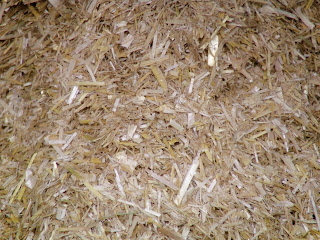
When measuring the flow rate and totalization of a bulk solid materials with a flow meter, there are a lot of options.  However, when the particles of the bulk solid are large, irregular shaped, and vary greatly in bulk density, the options quickly dwindle down to a few. Large Bulk Materials like tobacco, recycled plastic bottles, recycled carpet pieces, trash, construction debris, biomass feed stocks (like wood products, hay, straw, and leaves) and the like are not only difficult to move through a process, but their product characteristics make it almost impossible to accurately measure the flow. Biomass Materials - Hay/Straw Biomass Materials - Wood Chunks/Chips Recycled Plastic Bottles Construction Debris To get an accurate mass flow measurement of bulk solids with large particles and irregular product characteristics the mass flow meter that is used must be able to measure the flow and have no dependence on these varying product characteristics like bulk de...

Winter Weather and how it affects Air Flow Measurement - Freezing Flow Measurement Issues

Image
Even though it does not feel like it here in the Eastern US, it is definitely winter in many parts of the world.  And something happens every winter at process plants all around the world, namely instruments and instrumentation begin to have issues due to the temperatures, moisture, and the winds of winter.  These issues send Instrumentation Techs, Engineers, and Maintenance people scrambling to get them back online and functioning properly. One of the biggest issues is when an instrument that is crucial to the proper operation of the a plant gives erroneous readings or stops working all together.  This is especially the case with flow measurement devices and instruments.  Having a transmitter or moisture in the differential pressure lines freeze up will cause the transmitter to stop responding or give incorrect flow measurement readings.  These can be handled sometimes (depending on the temperatures) by putting the transmitters inside a building or under a...

Velocity Averaging Pitot Tubes for Air and Gas Flow Measurement

Image
When it comes to measuring the flow rate of air or gas in a duct, there are many different devices used.  For example, there are thermal sensors, hot wire anemometers, rotating vane anemometers, static pressure drop devices (venturi, orifice plate), and differential pressure devices (pitot, annubar, primary element).  The most widely used and considered a true measurement of the flow is the differential pressure device.  The most widely used differential pressure device is a velocity averaging pitot tube. Velocity Averaging Pitot Tube The velocity averaging pitot tube is a device that when inserted into the air or gas flow stream, provides a high pressure measurement port and a low pressure measurement port.  The high pressure port measures the total pressure created when the air or gas stream impacts the port, where the low pressure port typically measure the static pressure in the duct. VAP³ Velocity Averaging Pitot Tube from Eastern Instruments The dif...

How to Fix your Weigh Belt Feeder without major changes to your process

Image
Weigh Belt Feeders have been widely used for many years to measure the flow rate and totalization of solid materials in a process while providing a feed device to move materials through that process.  For some products they can be accurate enough to keep in your process and deal with their calibration issues, but for some products, they can be a maintenance nightmare and something that needs to be replaced.  However, with their large footprint and complex installation, finding a replacement feeder that fits can be a real issue. One way to deal with this maintenance issue but to still have that vital process measurement is to install a flow meter that can be installed at the end of a belt conveyor.  Since the Weigh Belt is in essence a belt conveyor, it would be used as just a material handling device and not a flow meter.  Once such a device that can fit in such a tight space is the CentriFlow Type I meter from Eastern Instruments. CentriFlow Type I Meter ...

Controlling the Flow of a Solid using a Feeder with Integral PID Control Capabilities

Image
Measuring the Mass Flow Rate of a Solid Material can be hard enough, but when a process needs a Controlled Flow Rate as well, this can be really difficult.  Controlling the Flow Rate in a process requires a PID control loop, where the input is an accurately measured flow rate and the controlling device is able to provide a fast change when an input change is noted, without overshoot or undershoot. In most industrial plants, these types of flow controls are typically done by a PLC.  These same PLC's usually take in all of the inputs of the process and compute all of the outputs to all of the devices in the process.  The loads on these PLC's can vary greatly and typically result in a long scan times that can adversely affect the PLC's ability to provide the best PID control loop.  This makes the control of the loop inaccurate, slow, and creates difficulty when trying to tune the loop to obtain the highest degree of control. The best way to get around these issues i...