Posts

Showing posts with the label Solids Flow

Differences between the Impact Flow Meter and the Centripetal Force Flow Meter
Image
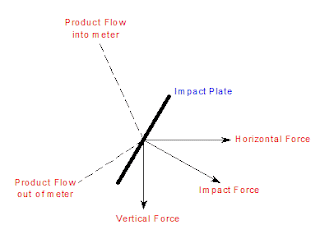
There are a lot of solids flow meters on the market these days.  But not all of these devices are the same, even though they may look the same.  Many companies promote their devices as one thing, but underneath the hood they are really something else.  So, how does a plant manager, process engineer, or maintenance manager tell the difference to pick the device they need to get the results they need?  This blog will try to help clarify the difference between two of the most popular solids flow meters, the impact meter or impact flow meter and the centripetal force meter. HOW THEY WORK The Impact Flow Meter: The impact flow meter goes by many different names like impact meter, impact scale, impact weigher or impact flow meter, but they are all basically the same.  The measurement technique for an impact meter is fairly simple, product flow is dropped down a chute and directed to impact plate at a specific angle and flow rate. The impact creates an imp...
Choosing a Solids Flow Meter - When is testing is needed?

Image
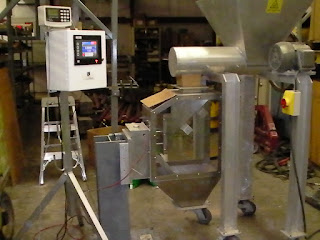
Not all Solids Mass Flow Meters are created equally, so how do you know which meter is best suited to measure your product??? When asking this question, the best answer is, when in doubt, test some product!  Most manufacturers of mass flow meters should have a test lab and a list of products that they have tested with their devices, building a database of what works and what does not work. WHAT TO LOOK FOR WHEN EXPLORING THE TESTING OPTION? REPLICATE THE INSTALLATION - Testing a product sample should also be done in a way that replicates the application or installation location.  This means that the equipment being used for testing should be similar to that of what will be used in the field.  For example, if the application calls for a flow meter (flowmeter) to be installed under the discharge of a screw conveyor, then the testing lab should have a screw conveyor. Simulation of Screw Conveyor Feeding a CentriFlow Type II Meter Simulation of Belt Fee...

Flow Measurement of Large Bulk Solids with a Flow Meter

Image
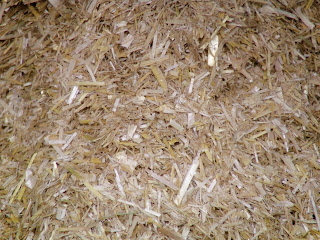
When measuring the flow rate and totalization of a bulk solid materials with a flow meter, there are a lot of options.  However, when the particles of the bulk solid are large, irregular shaped, and vary greatly in bulk density, the options quickly dwindle down to a few. Large Bulk Materials like tobacco, recycled plastic bottles, recycled carpet pieces, trash, construction debris, biomass feed stocks (like wood products, hay, straw, and leaves) and the like are not only difficult to move through a process, but their product characteristics make it almost impossible to accurately measure the flow. Biomass Materials - Hay/Straw Biomass Materials - Wood Chunks/Chips Recycled Plastic Bottles Construction Debris To get an accurate mass flow measurement of bulk solids with large particles and irregular product characteristics the mass flow meter that is used must be able to measure the flow and have no dependence on these varying product characteristics like bulk de...

Solids Flow Meters and Why Every Process Should Have Them

Image
A question that we get asked a lot is "why do I need a Solids Flow Meter?" or "how can a Solids Flow Meter help my plant or process?"  To answer these questions, we first will look at what a Solids Flow Meter is and then where/how it can be implemented. CentriFlow Solids Mass Flow Meter from Eastern Instruments DEFINITION OF SOLIDS FLOW METER: Solids Flow Meters can be called many things from Flow Meters, Flow Instrumentation, Process Measurement Devices, or even just Process Meters.  A Solids Flow Meter can be considered an device or point measurement, that when placed in a process, provides a window into what is going on in the process.  It is an instrument that provides vital process flow data like Flow Rate and Totalization/Totalized Weight.  This can be on a continuous process or on a batch process.  The Flow Rate would be in mass units like lb/hr, kg/hr, Ton/hr, MTon/hr, etc, and the Totalization/Totalized Weight would be in mass units like lb, kg...

Measuring the Mass Flow of Difficult to Handle Powders with the CentriFlow Meter

Image
Measuring the mass flow rate and totalization of a dry solid material can be difficult when that product is a hard to handle powder.  Product characteristics like particle size, cohesiveness, flowability, bulk density can all affect the accuracy of the mass flow measurement of a powder.  Below we will look at these characteristics in more detail and discuss how the CentriFlow Solid Mass Flow Meter is suited to deal with issues from these characteristics, making them non-issues or helping to eliminated/overcome them to get the best accuracy possible. CentriFlow Meter - Type II Configuration Particle Size: Particle size can become an issue when a material's particles get down to the powder regime, around 0.0394" or 1000 microns (18 mesh) and smaller.  The smaller the particle, usually the more trouble it can be to handle and therefore to measure.  However, there are definitely small particles that are not an issue, like sand, which can fall into the 0.0098" or ...